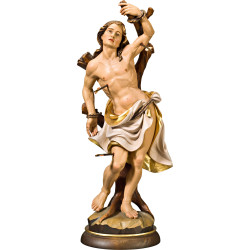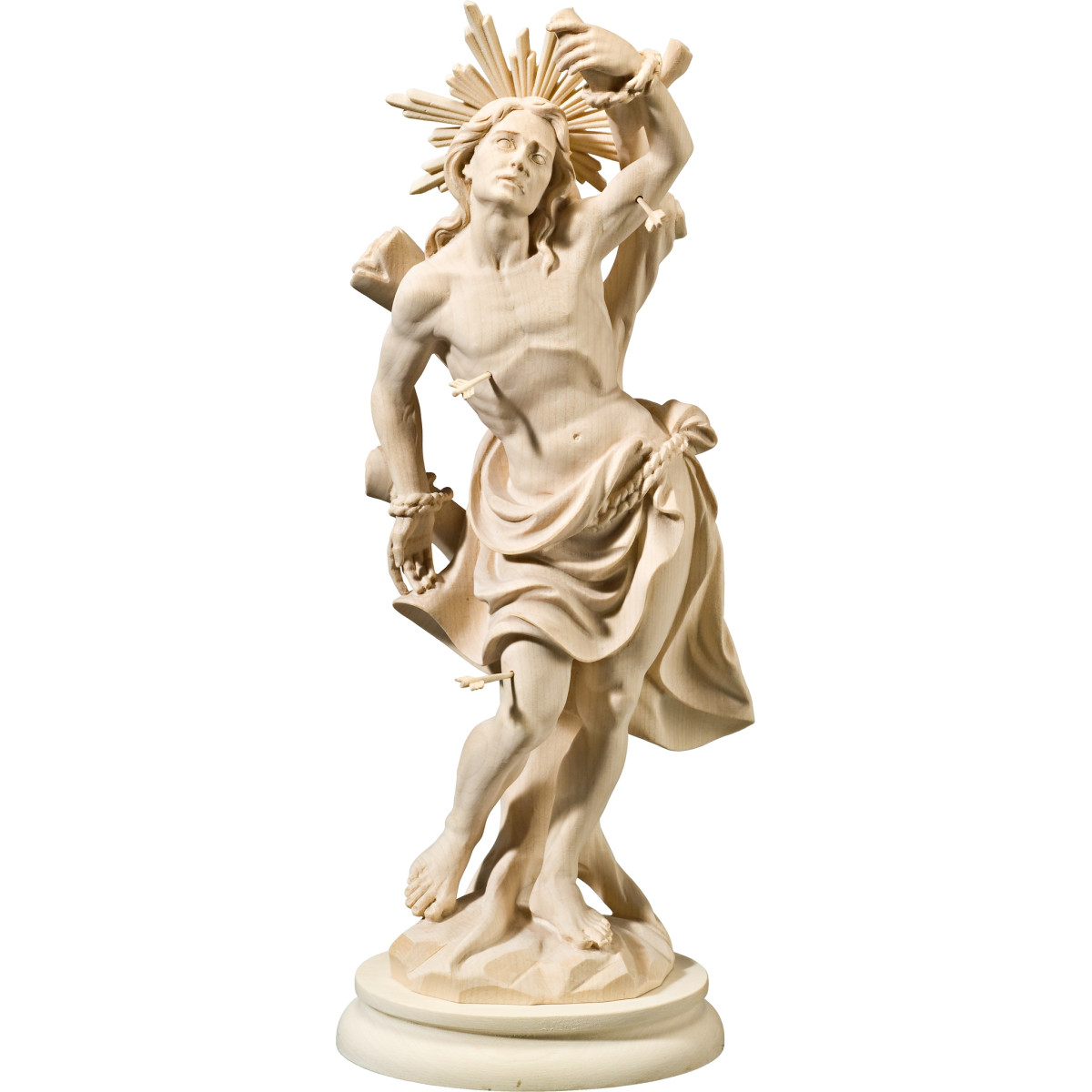
Saint Sebastian, an early Christian martyr and symbol of courage in faith, is widely depicted as a young man struck by arrows. He is revered as patron of soldiers, protection, and defenders of the Church.

Saint Sebastian is among the most famous early Christian martyrs, frequently portrayed in sacred art. His name derives from Greek and means “the venerable.”
According to tradition, Sebastian was born around 256 AD in Narbona and educated in Milan, his mother’s native city. He entered the military and gained favor under Emperor Diocletian, who named him tribune of the first cohort of the imperial guard, unaware of his Christian faith.
Using his position, Sebastian discreetly assisted imprisoned Christians and converted many nobles and soldiers. When the emperor discovered his faith, Sebastian was sentenced to death by arrows: tied to a tree and shot until he collapsed.
Believed dead, his body was abandoned, but the Christian noblewoman Irene rescued and healed him. Though urged to flee, Sebastian returned to Roman authorities, proclaiming his faith. Horrified to see him alive, the emperor ordered his execution by flogging.
The execution occurred in the Palatine hippodrome. His body was thrown into the Cloaca Maxima, later recovered by Lucina and buried on the Via Appia, where the Basilica of Saint Sebastian now stands.
Iconography:
As a young man pierced with arrows
Feast Day:
January 20
Patron:
Of soldiers, municipal police, marksmen associations; invoked against heresy, enemies of religion, livestock epidemics, and plague
You might also like
Saint Sebastian, an early Christian martyr and symbol of courage in faith, is widely depicted as a young man struck by arrows. He is revered as patron of soldiers, protection, and defenders of the Church.