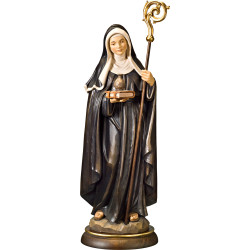
Saint Elizabeth of Portugal (1271–1336) was a queen, peacemaker and a woman of extraordinary charity. Known for reconciling her husband King Denis with their son Afonso IV, she prevented a civil war and dedicated her life to the poor and the sick. After being widowed, she became a Franciscan tertiary and retired to the convent she had founded in Coimbra. She is remembered as a symbol of peace, prayer and mercy.

Saint Elizabeth of Portugal was born in 1271 in Spain. She was the great-granddaughter of Emperor Frederick II and the namesake of her grandaunt, Saint Elizabeth of Thuringia, whose example of charity inspired her life. From childhood, she showed deep piety and a strong commitment to peace.
At the age of twelve, she was married to King Denis of Portugal. Their marriage was marked by suffering: although Elizabeth remained faithful, the king continuously betrayed her and suffered from a morbid jealousy. She even cared for his illegitimate children, raising them with kindness.
Elizabeth became a key political figure when tension exploded between her husband and their son, the future Afonso IV. The queen courageously placed herself unarmed between the two armies, preventing a bloody battle and bringing reconciliation to the royal family.
Renowned for her charity, Elizabeth donated nearly all her possessions to the poor. She supported the construction of convents, orphanages, and institutions for the needy. She founded the famous Convent of the Poor Clares in Coimbra. During a severe famine in Portugal, she tirelessly helped the hungry, becoming a symbol of hope.
After the death of her husband in 1325, Elizabeth became a Franciscan tertiary and retired to the convent she had founded. She devoted the rest of her life to prayer and assistance to the poor. Even in old age, she continued to mediate conflicts: in 1336, already ill, she prevented another war between Afonso IV and the king of Castile.
She died on 4 July 1336 in Estremoz. Her remains rest in the Convent of Santa Clara in Coimbra. She was beatified in 1516 and canonized in 1625.
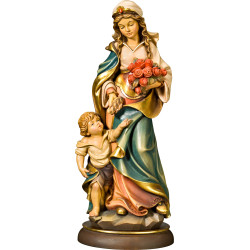
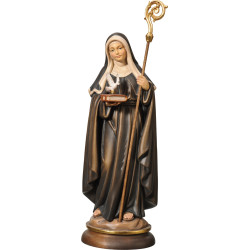
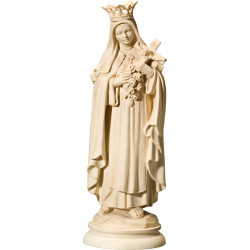
Depicted as a nun with a laid-aside crown, in royal garments, performing acts of charity, or with a rose.
4 July
Of Portugal, Coimbra, Estremoz, Zaragoza, and invoked in times of war.
You might also like
Saint Elizabeth of Portugal (1271–1336) was a queen, peacemaker and a woman of extraordinary charity. Known for reconciling her husband King Denis with their son Afonso IV, she prevented a civil war and dedicated her life to the poor and the sick. After being widowed, she became a Franciscan tertiary and retired to the convent she had founded in Coimbra. She is remembered as a symbol of peace, prayer and mercy.