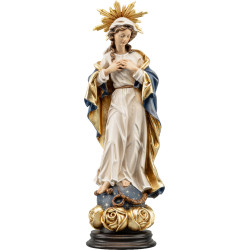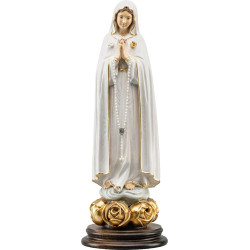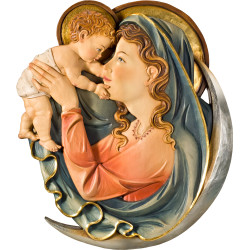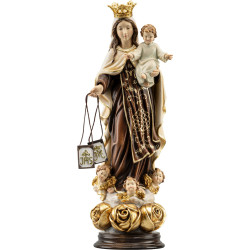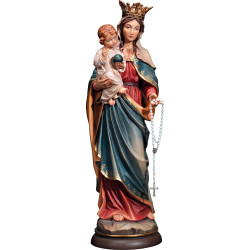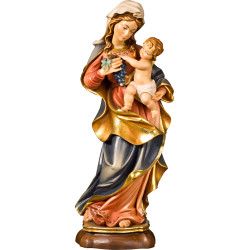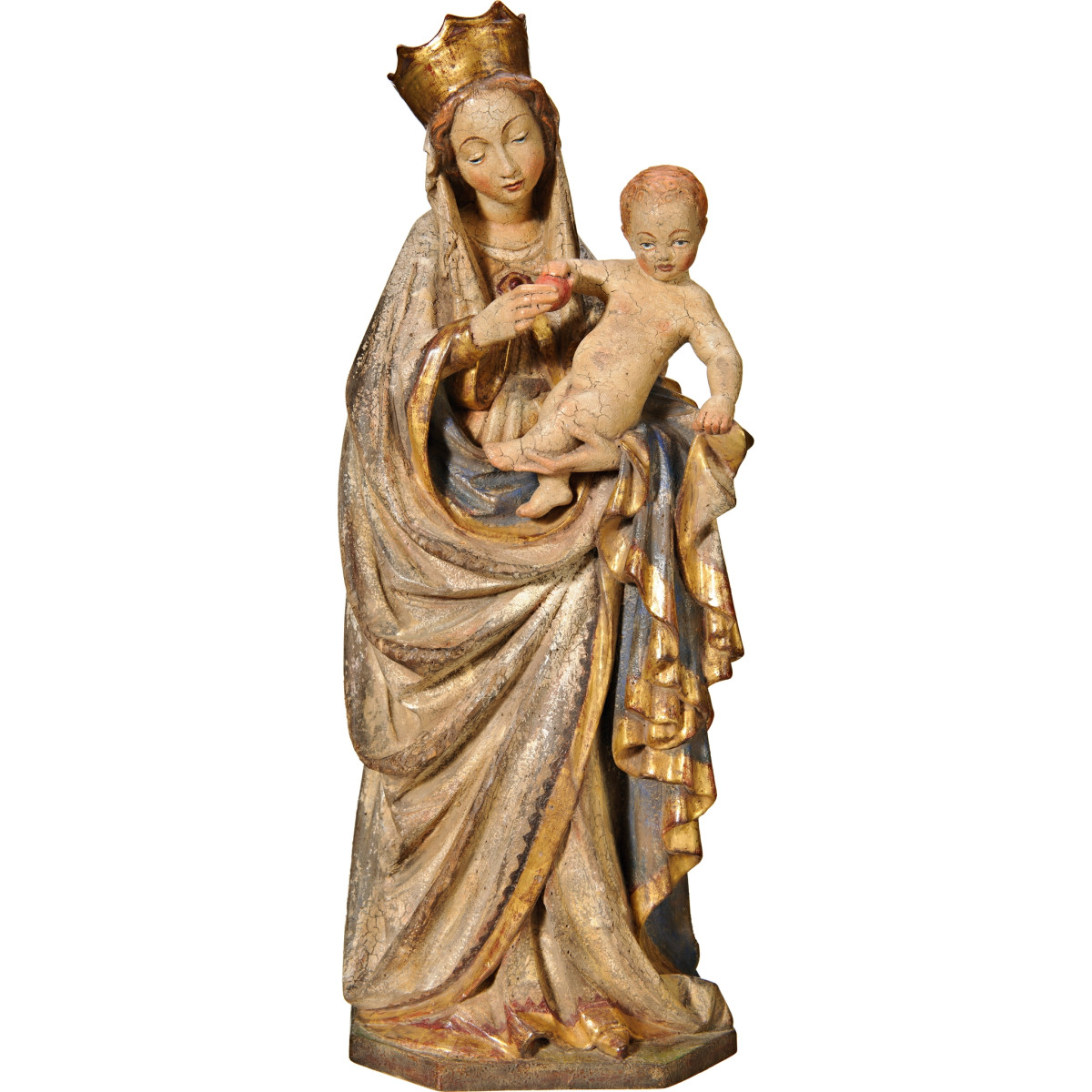
Gothic Madonna, also known as the Madonna of Wrocław, portrays the Virgin Mary with the Child Jesus according to the elegant artistic style of the Gothic period. Graceful proportions, flowing drapery and gentle expressions make this one of the most admired Marian representations of medieval art. The statue is crafted from maple or lime wood by artisans of the Val Gardena - Dolomites.

The Gothic Madonna, also known as the Madonna of Wrocław, belongs to the great tradition of European Gothic art. This famous Marian image is inspired by sculptures created between the fourteenth and fifteenth centuries, known for their elegance and spiritual beauty.
The Virgin Mary is depicted holding the Child Jesus in her arms. The affectionate relationship between mother and child expresses tenderness, protection and maternal love.
The title Madonna of Wrocław refers to the city of Wrocław, historically Breslau, an important artistic and religious center of Central Europe during the Middle Ages. The region became renowned for its outstanding Gothic sculptures.
The Gothic style is characterized by slender figures, graceful drapery and harmonious proportions. In this representation Mary appears both as Queen of Heaven and as a loving mother close to humanity.
The sculpture conveys serenity, grace and spiritual contemplation, making it suitable for homes, chapels and places of prayer.
The statue is crafted from maple or lime wood by artisans of the Val Gardena - Dolomites.
Iconography: Gothic Madonna holding the Child Jesus.
Feast Day: Marian devotion.
Patronage: honored as Mother of God and Queen of Heaven.
Gothic Madonna, also known as the Madonna of Wrocław, portrays the Virgin Mary with the Child Jesus according to the elegant artistic style of the Gothic period. Graceful proportions, flowing drapery and gentle expressions make this one of the most admired Marian representations of medieval art. The statue is crafted from maple or lime wood by artisans of the Val Gardena - Dolomites.